AFM NEWS
Setting Clear Boundaries: A Step-by-Step Guide to Establishing Property Lines on Rural Land

Jennifer Hunt, Content Writer, and Chris Miller, Managing Director, Real Estate Services
Establishing marked property lines on rural properties is a prudent task that reduces liability concerns and helps manage land effectively. Whether you’ve just acquired a property or are determining timber harvest locations and hunting zones, there are necessary steps all landowners should take. In this step-by-step guide, let’s examine how to review and, if necessary, establish boundary lines on your property.
- Evaluate property records: Your AFM Real Estate Agent can review your property records and determine what information is available for reference. Most counties maintain boundary descriptions and/or plat maps (property line maps) within their register of deeds office that can give an overview of the parcel layout. This information can be utilized to locate evidence of your property line locations on the ground.
- Hire a licensed land surveyor: If your property lines are not marked and evidence cannot be located on the ground, the service of a land surveyor may be required. These professionals research your property and other adjoining properties to establish the correct location of boundaries and corners using precision equipment. Once surveyors determine boundary lines, they can mark them in various ways, such as hack marks or chops in trees, paint, metal rods, stakes, etc, so they are easier to locate in the future when management needs to occur or to deter trespass or encroachment.
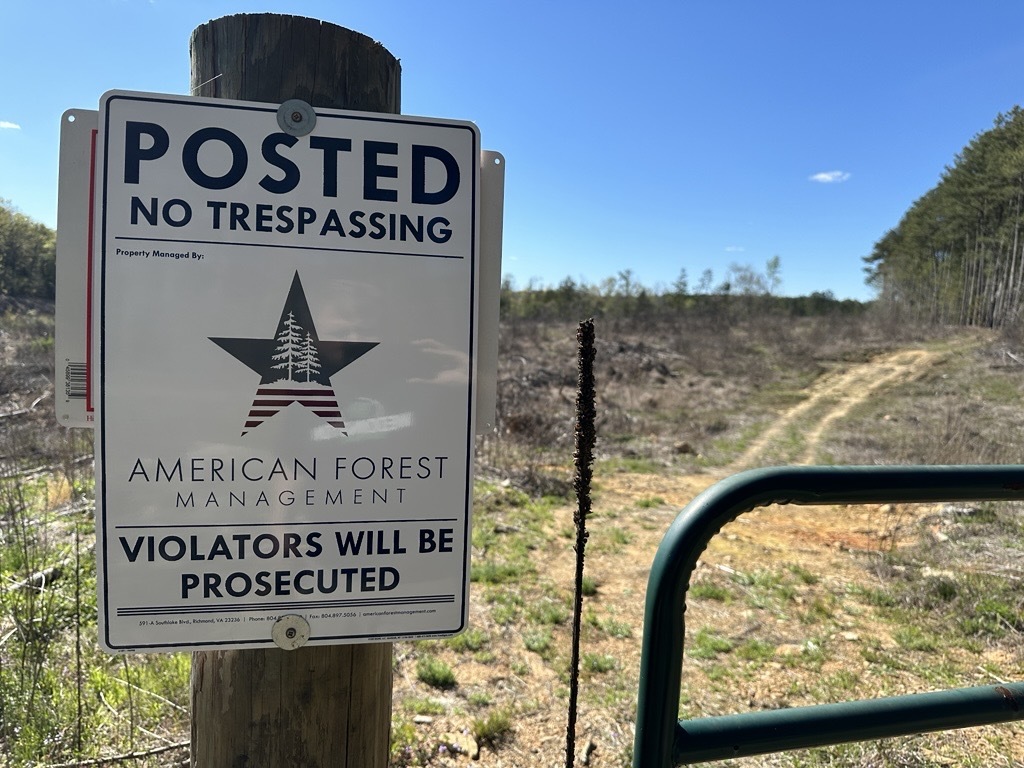
- Record the survey results: If you have a new survey completed on your property and a plat created, it is wise to have your surveyor or your attorney record that plat at the register of deeds in the county where your property is located. This adds the information you paid for to the public record, which protects your property investment and prevents that work from being lost. Once the boundary lines have been established and recorded, there are other considerations worth noting. Suppose you plan to develop, subdivide, or modify a property. In that case, it’s crucial to consult local zoning laws and ordinances (for instance, the distance from property lines to structures or the number of lots allowed) to ensure adherence and prevent legal issues. Landowners may also elect to install signs denoting private property to discourage any unauthorized access.
Why it matters: Clearly marked boundaries protect landowners in several ways, as they help deter trespass problems by showing where your property is located. They also help avoid accidental timber trespass where neighbors could accidentally harvest timber you own. When boundary lines are clearly delineated, timber sale preparation and management activities are conducted with ease. This reduces your liability by preventing potential trespassers from stepping foot on your property and unwittingly being injured. Finally, they can help avoid encroachment problems from neighbors who dump debris across lines or build structures and fences on your side of the property line.
Owning rural land can be a rewarding experience, regardless of the objectives or goals of the property. Having clear property lines helps guide land management activities and protect landowners from any future or current legal disputes. Accurately marked property boundaries make great neighbors! Your AFM Real Estate agent is ready to assist you every step of the way.