
AFM NEWS
Celebrating Nature's Bounty
By Jennifer Hunt (Content Writer)
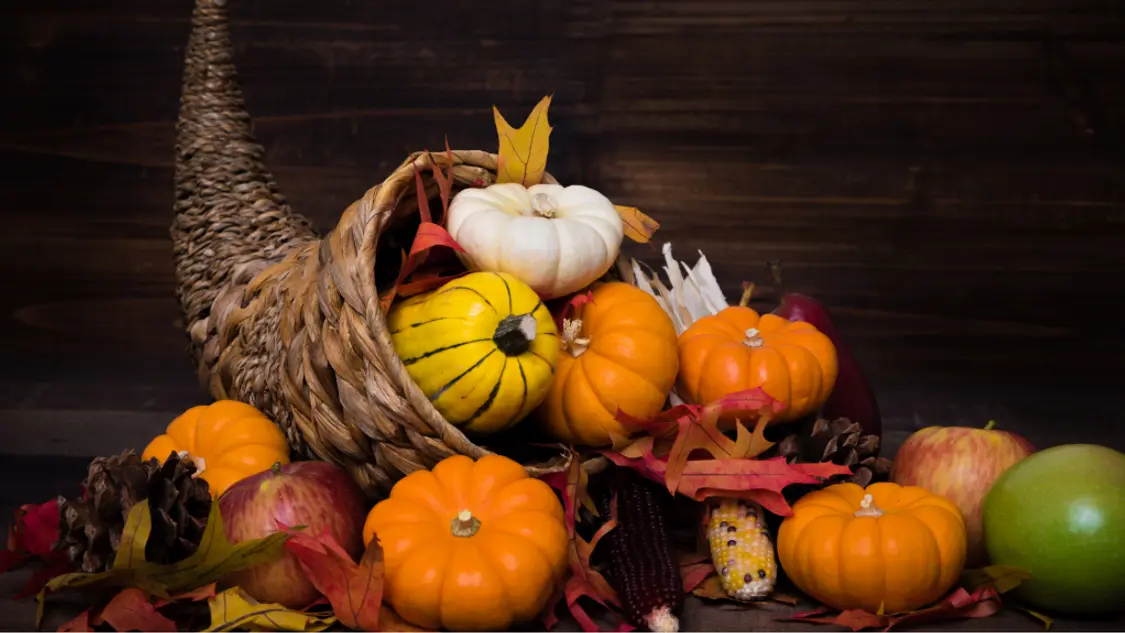
During this time of year, we can’t help but appreciate and celebrate nature’s abundance. The cornucopia, also known as the “horn of plenty,” is a powerful symbol of the overflowing earth and all that it provides. It may appear as décor on some Thanksgiving tables, but it also reflects evolving traditions, cultural influences, and the meal that brings us together. Let’s explore the history of four plant-based foods that feature prominently in many holiday dishes.
Interestingly, our typical Thanksgiving menu is a collection of fruits, vegetables, and grains with origins from all over the globe. While some were cultivated by Indigenous peoples in the Americas thousands of years ago, others traveled across continents to become a staple of our cooking and baking over many years.
- Corn: This incredibly important staple crop was domesticated in Mexico nearly 10,000 years ago from a wild grass called teosinte. It eventually traveled to the Americas via trade and cultural exchange, and now it’s used in a myriad of recipes from the familiar corn casserole to polenta, grits, and cornbread. In its various iterations, corn accounts for19.5% of human calories worldwide.
- Pumpkins and Squash: Pumpkin varieties are another crop that was domesticated in Mexico thousands of years ago and made their way to the Americas roughly 5,000 years ago. Research shows that colonists enjoyed pumpkins that were steamed and filled with milk or cream to make a custard, paving the way for one of our favorite Thanksgiving desserts: pumpkin pie.
- Cranberries: These berries are native to the northeastern region of the United States, and Indigenous peoples used them in a variety of ways, including food, medicine, and dye. During those times, cranberries were likely mashed into a rough compote since cranberry sauce as we know it would use far too much imported sugar to realistically prepare. It wasn’t until 1912, when a man named Marcus Urann started packaging and selling canned cranberry sauce, that people who lived far from cranberry bogs could enjoy this side dish on Thanksgiving.
- Potatoes: Although it’s common to see sweet potatoes in a casserole or a pie on Thanksgiving, it’s unlikely that sweet potatoes were featured in the first Thanksgiving feast. It is believed that potatoes were likely domesticated in Peru nearly 10,000 years ago and were later introduced to Europe, where they slowly became a staple crop.
Although the foods we commonly eat at Thanksgiving were likely not featured at the first feast, it’s a great reminder that Thanksgiving food traditions have evolved over centuries as a result of migration, agriculture, cultural exchanges, and what the land could bear.
Of course, nature’s bounty goes far beyond the food we consume on Thanksgiving. The interconnectedness of nature and the larger ecosystems at work makes sustaining human life possible. From the soil beneath our feet to the trees and forests that provide so much, we have a lot to be grateful for. As we consider this, it’s important to find ways to give back to nature after it has given so much to us. Whenever possible, support local farmers by shopping at farmers' markets or participating in co-op boxes with a variety of seasonal fruits and vegetables. Reduce food waste by preparing meals thoughtfully, sharing leftovers, and composting scraps and other organic materials. Rather than sending these items to a landfill, organic waste supports healthy soil and puts nutrients back into the earth. Participate in conservation efforts by volunteering at tree planting or pollinator garden events. Although nature is exceedingly generous, its resources are not infinite. The same earth that gives so much to us every day requires our care and stewardship so that it can continue to flourish.